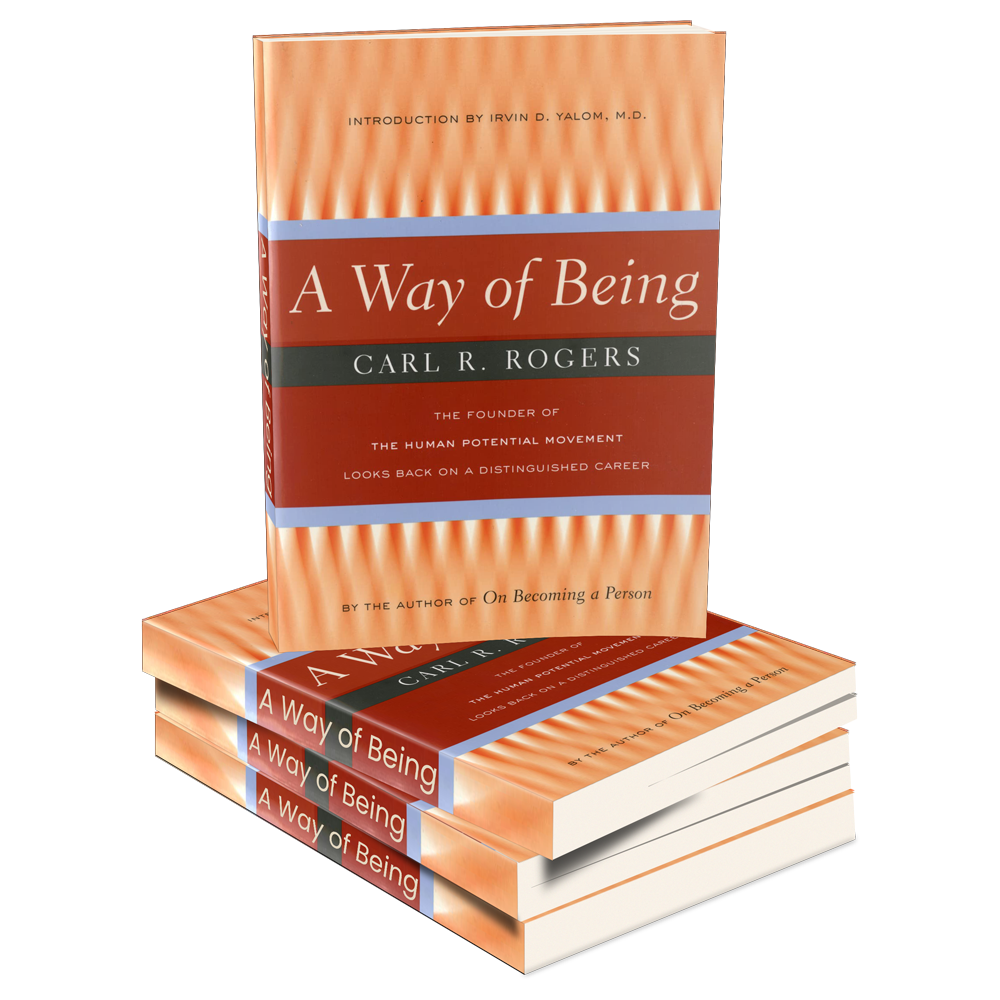
A Way Of Being
$14.99
A Way of Being by Carl Rogers is a book that offers readers a profound insight into the personal philosophy and beliefs of one of the most influential psychologists of the 20th century. In this book, Carl Rogers explores the principles of humanistic psychology that he helped to establish, offering his perspectives on empathy, self-awareness, and personal growth. Through a collection of essays and lectures, Carl Rogers shares his vision for a more compassionate and empathetic world, providing valuable insights for anyone interested in psychology or personal development.
Carl Rogers is one of the most influential figures in the field of psychology, having developed the client-centered approach to therapy and played a leading role in the establishment of humanistic psychology. His book, A Way of Being is a collection of essays and lectures that offer profound insights into Rogers’ personal philosophy and beliefs. In this article, we will explore the key themes of A Way of Being and consider the ways in which Rogers’ perspectives on empathy, self-awareness, and personal growth continue to resonate with readers today.
The Core Themes of A Way of Being
In A Way of Being, Carl Rogers offers a collection of essays and lectures that reflect on his personal philosophy and beliefs. The book is organized around several key themes, which we will explore in more detail below.
Empathy and Understanding
One of the central themes of A Way of Being is empathy and understanding. Carl Rogers believed that empathy was a crucial component of effective therapy, and he stressed the importance of truly understanding the experiences and perspectives of others. In his essays, he explores the ways in which empathy can foster personal growth and lead to greater understanding and connection with others.
Empathy is the ability to understand and share the feelings of another person. In person-centered therapy, empathy is a crucial component of the therapeutic relationship. It is the therapist’s ability to empathize with the client that allows for the creation of a safe and supportive environment where the client feels heard and understood.
Empathy is demonstrated by active listening, non-judgmental communication, and an open and accepting attitude towards the client’s experiences. The therapist must be fully present and engaged in the therapeutic process, and must strive to see the world from the client’s perspective.
Self-Awareness and Personal Growth
Another key theme of A Way of Being is self-awareness and personal growth. Carl Rogers believed that individuals have an innate drive towards self-actualization, and that therapy can help individuals to overcome obstacles and achieve their full potential. Through his essays, Carl Rogers offers insights into the nature of personal growth and the role that therapy can play in helping individuals to achieve their goals.
One of the main goals of person-centered therapy is to facilitate personal growth and self-awareness in the client. By providing a supportive and empowering environment, Rogers’ way of being can help clients gain a deeper understanding of their thoughts, emotions, and behaviors, and develop strategies for personal growth and development.
Self-Awareness
Self-awareness is the ability to recognize and understand one’s own thoughts, emotions, and behaviors. In person-centered therapy, self-awareness is a crucial component of personal growth and development. By becoming more aware of their inner experiences, clients can gain a deeper understanding of themselves and their motivations.
Carl Rogers A Way Of Being can help facilitate self-awareness by providing a safe and supportive environment where clients can explore their thoughts and emotions without fear of judgment or criticism. Through active listening, empathetic communication, and a non-judgmental attitude, the therapist can help the client gain a deeper understanding of their experiences and develop a greater sense of self-awareness.
Personal Growth
Personal growth refers to the process of developing new skills, knowledge, and perspectives that lead to increased self-awareness, self-confidence, and fulfillment. In person-centered therapy, personal growth is a key goal of the therapeutic process. By providing a supportive and empowering environment, Carl Rogers A Way Of Being can help clients develop the skills and knowledge they need to achieve their personal goals and aspirations.
Personal growth is facilitated in person-centered therapy by creating a collaborative relationship between the therapist and client. By working together to explore the client’s thoughts and feelings, the therapist and client can develop a deeper understanding of the client’s experiences and develop strategies for personal growth and development.
The therapist’s role in facilitating personal growth is to provide a safe and supportive environment where the client feels free to explore their thoughts and emotions. By being empathetic, accepting, and genuine in their interactions with the client, the therapist can help the client develop the self-awareness and self-confidence they need to achieve their personal goals.
Q: How Long Does Person-Centered Therapy Typically Last?
A: The length of person-centered therapy can vary depending on the individual client and their needs. Some clients may see significant progress in a few sessions, while others may require longer-term therapy to achieve their personal goals.
Q: Is Person-centered Therapy Effective For Treating Mental Health Conditions?
A: Person-centered therapy has been found to be effective in treating a variety of mental health conditions, including anxiety, depression, and post-traumatic stress disorder (PTSD). However, it may not be the best approach for every individual, and it is important to consult with a mental health professional to determine the most appropriate treatment approach.
Q: Can I Use Carl Rogers A Way Of Being In My Personal Relationships?
A: Yes, many of the key features of Carl Rogers A Way Of Being, such as empathy, acceptance, and genuineness, can be applied in personal relationships to create more positive and supportive connections with others. By being empathetic towards others, accepting their experiences without judgment, and being genuine and transparent in our interactions, we can create deeper and more meaningful connections with those around us.
Creativity and Innovation
Creativity and innovation are two important concepts in Carl Rogers A Way Of Being. In person-centered therapy, creativity and innovation can help clients find new and effective ways of thinking, feeling, and behaving. By fostering a creative and innovative environment, Rogers’ approach can help clients explore their full potential and achieve personal growth and development.
Creativity
Creativity refers to the ability to generate new ideas, concepts, and solutions to problems. In person-centered therapy, creativity is an important component of personal growth and development. By encouraging clients to explore new and different ways of thinking and behaving, the therapist can help clients develop their creative potential and find new solutions to the challenges they face.
Carl Rogers A Way Of Being can help facilitate creativity by providing a safe and supportive environment where clients feel free to explore their thoughts and emotions without fear of judgment or criticism. By encouraging clients to express themselves in creative ways, such as through art, music, or writing, the therapist can help clients tap into their creative potential and find new and innovative solutions to their problems.
Innovation
Innovation refers to the process of developing new and creative ideas, products, or solutions to problems. In person-centered therapy, innovation is an important goal of the therapeutic process. By encouraging clients to explore new and different ways of thinking and behaving, the therapist can help clients develop their innovative potential and find new and effective solutions to their challenges.
Carl Rogers A Way Of Being can help facilitate innovation by encouraging clients to challenge their assumptions and beliefs about themselves and their experiences. By helping clients develop a greater sense of self-awareness and understanding of their experiences, the therapist can help clients identify new and innovative solutions to their problems.
The therapist’s role in fostering innovation is to provide a supportive and empowering environment where clients feel free to explore new ideas and perspectives. By being open-minded, flexible, and non-judgmental in their interactions with the client, the therapist can help the client develop the confidence and creativity they need to find new and innovative solutions to their problems.
Q: Can creativity and innovation be developed in anyone?
A: Yes, creativity and innovation can be developed in anyone. While some people may have a natural talent for creative thinking, anyone can learn to think more creatively and develop innovative solutions to problems.
Q: Can creativity and innovation be applied in non-artistic fields?
A: Yes, creativity and innovation can be applied in a wide range of fields, including business, science, and technology. By encouraging people to think outside the box and explore new and innovative solutions to problems, organizations can foster a culture of creativity and innovation that can lead to long-term success.
Q: How can I develop my own creativity and innovation skills?
A: There are many ways to develop your own creativity and innovation skills, such as reading books and articles on creativity and innovation, taking courses or workshops, practicing creative thinking exercises, and seeking out new and diverse experiences that challenge your assumptions and beliefs. It is also important to cultivate a mindset of openness, curiosity, and experimentation to help foster your creative potential.
Social Justice and Equality
Social justice and equality are important concepts in Rogers’ A Way of Being. In person-centered therapy, social justice and equality play a significant role in creating a safe and inclusive environment for clients. By promoting social justice and equality, Rogers’ approach can help individuals and communities achieve greater well-being and empowerment.
Social Justice
Social justice refers to the idea that every individual should have equal access to basic human rights, opportunities, and resources. In person-centered therapy, social justice is an important goal of the therapeutic process. By promoting social justice, the therapist can help clients explore the ways in which social inequalities and injustices may be impacting their mental health and well-being.
Carl Rogers A Way of Being can help facilitate social justice by encouraging clients to examine their own assumptions and beliefs about power, privilege, and oppression. By fostering a deeper understanding of social injustices, the therapist can help clients develop the knowledge, skills, and confidence they need to advocate for themselves and others in their communities.
Equality
Equality refers to the idea that every individual should have the same opportunities and rights, regardless of their race, gender, sexuality, or other social identities. In person-centered therapy, equality is an important principle that guides the therapeutic process. By promoting equality, the therapist can help clients feel valued and respected for who they are, and can help them develop a sense of empowerment and agency.
Carl Rogers A Way of Being can help facilitate equality by creating a safe and inclusive environment where clients feel free to express themselves and explore their thoughts and feelings without fear of judgment or discrimination. By fostering an atmosphere of openness, acceptance, and respect, the therapist can help clients develop a greater sense of self-worth and confidence.
The therapist’s role in promoting social justice and equality is to be an ally and advocate for the client, and to create a therapeutic environment that is responsive to the client’s needs and concerns. By acknowledging and addressing issues of power, privilege, and oppression in the therapeutic relationship, the therapist can help promote social justice and equality both within the therapeutic context and in the client’s broader life.
Carl Rogers A Way of Being emphasizes the importance of social justice and equality in creating a safe and inclusive environment for clients. By promoting social justice and equality, this approach can help individuals and communities achieve greater well-being and empowerment.
Social justice and equality are important principles in Rogers’ approach, and can be facilitated by encouraging clients to examine their own assumptions and beliefs about power, privilege, and oppression. By fostering a deeper understanding of social injustices, the therapist can help clients develop the knowledge, skills, and confidence they need to advocate for themselves and others in their communities.
Q: How can social justice and equality be promoted in therapy?
A: Social justice and equality can be promoted in therapy by creating a safe and inclusive environment where clients feel free to explore their thoughts and feelings without fear of judgment or discrimination. The therapist can also help clients develop a greater understanding of social injustices and advocate for themselves and others in their communities.
Q: What role does the therapist play in promoting social justice and equality in therapy?
A: The therapist plays an important role in promoting social justice and equality in therapy by being an ally and advocate for the client, and by creating a therapeutic environment that is responsive to the client’s needs and concerns.
Q: Can social justice and equality be achieved in broader society?
A: Achieving social justice and equality in broader society is a complex and ongoing process. However, by promoting social justice and equality in therapy, individuals and communities can develop the knowledge, skills, and confidence they need to advocate for social change and create a more just and equitable society.
The Relevance of A Way of Being
Although A Way of Being was first published in 1980, its themes and ideas remain relevant and important today. In an era characterized by political polarization, social unrest, and economic inequality, the messages of empathy, understanding, and personal growth that Rogers espoused are perhaps more important than ever.
Through his writings, Carl Rogers encourages readers to consider the ways in which they can contribute to a more just and equitable society, and to work towards personal growth and self-actualization. He stresses the importance of empathy and understanding in fostering connection and cooperation, and he offers insights into the nature of creativity and innovation that can help individuals to achieve their goals.
Furthermore, the book offers a unique perspective on the nature of therapy and the role that therapists can play in helping individuals to achieve their goals. Rogers’ emphasis on empathy, congruence, and unconditional positive regard continues to influence the way that therapists approach their work today, and his insights into the nature of personal growth and self-actualization remain relevant to individuals seeking to achieve their full potential.
Overall, A Way of Being offers a powerful reflection on the nature of humanity and the ways in which individuals can work towards personal growth and greater understanding of themselves and others. Through its exploration of empathy, personal growth, creativity, and social justice, the book continues to offer important insights and inspiration to readers today.





Reviews
There are no reviews yet.